How to Win Friends and Influence People: Key Ideas
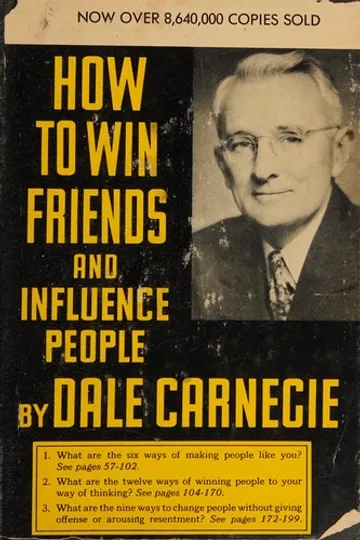
Dale Carnegie’s How to Win Friends and Influence People (1936) sorts decades of anecdotes into a set of practical principles for dealing with people. These 25 cards cover the three fundamental techniques, all six ways to make people like you, and the best-known principles for winning people to your way of thinking and changing them without resentment.
Practice this set for free — no account needed. Loads 25 flashcards into the learner.
Practice in the free learnerHow to study this set
Learn the three fundamental techniques and the six ways first; they carry most of the book. Then pick one principle a week and try it on purpose.

All 25 flashcards
What is the core idea of How to Win Friends and Influence People?
People respond to sincere appreciation, interest and respect far better than to criticism or pressure.
Into which four groups does Carnegie sort his principles?
Handling people, making people like you, winning people to your way of thinking, and changing people without resentment.
The 1936 original also had sections on letters and home life, dropped in the 1981 revision.
What is the first fundamental technique in handling people?
Don’t criticize, condemn or complain.
Criticism makes people defensive; even notorious criminals rarely blame themselves.
What is the second fundamental technique in handling people?
Give honest and sincere appreciation.
Carnegie separates it sharply from flattery, which is insincere.
What is the third fundamental technique in handling people?
Arouse in the other person an eager want.
When you go fishing, you bait the hook with what the fish likes, not what you like.
Which deep human urge does Carnegie, citing John Dewey, put at the center?
The desire to be important.
What is the first of the six ways to make people like you?
Become genuinely interested in other people.
What is the second of the six ways to make people like you?
Smile.
What is the third of the six ways to make people like you?
Remember that a person’s name is, to them, the sweetest and most important sound in any language.
What is the fourth of the six ways to make people like you?
Be a good listener; encourage others to talk about themselves.
What is the fifth of the six ways to make people like you?
Talk in terms of the other person’s interests.
What is the sixth of the six ways to make people like you?
Make the other person feel important — and do it sincerely.
What is the only way to get the best of an argument?
Avoid it.
Even when you win the argument, the other person resents losing it.
What should you never tell someone you disagree with?
That they are wrong — show respect for their opinion instead.
What should you do when you realize you are wrong?
Admit it quickly and emphatically.
Why get the other person saying “yes” early on?
Each yes builds agreement, while an early no hardens their position and is hard to take back.
How do you get people to embrace your idea?
Let them feel that the idea is theirs.
What should you try honestly to do before persuading anyone?
See things from the other person’s point of view.
What can motivate people when other appeals fail?
A challenge — the desire to excel and prove themselves.
Carnegie’s principle: throw down a challenge.
How should you begin when you need to correct someone?
With praise and honest appreciation.
How should you point out other people’s mistakes?
Indirectly.
Carnegie suggests linking praise and criticism with “and” instead of “but”.
What works better than giving direct orders?
Asking questions, which lets people use their own judgment and keeps their pride intact.
What should you allow someone who has made a mistake?
Let them save face.
Humiliating someone, even when you are right, costs goodwill.
What does giving someone “a fine reputation to live up to” mean?
Treating a person as if they already have the quality you want them to develop.
How should you respond to someone’s progress?
Praise the slightest improvement, and praise every improvement.